

Do You Need an Electrician to Add Panels to an Existing Solar System?
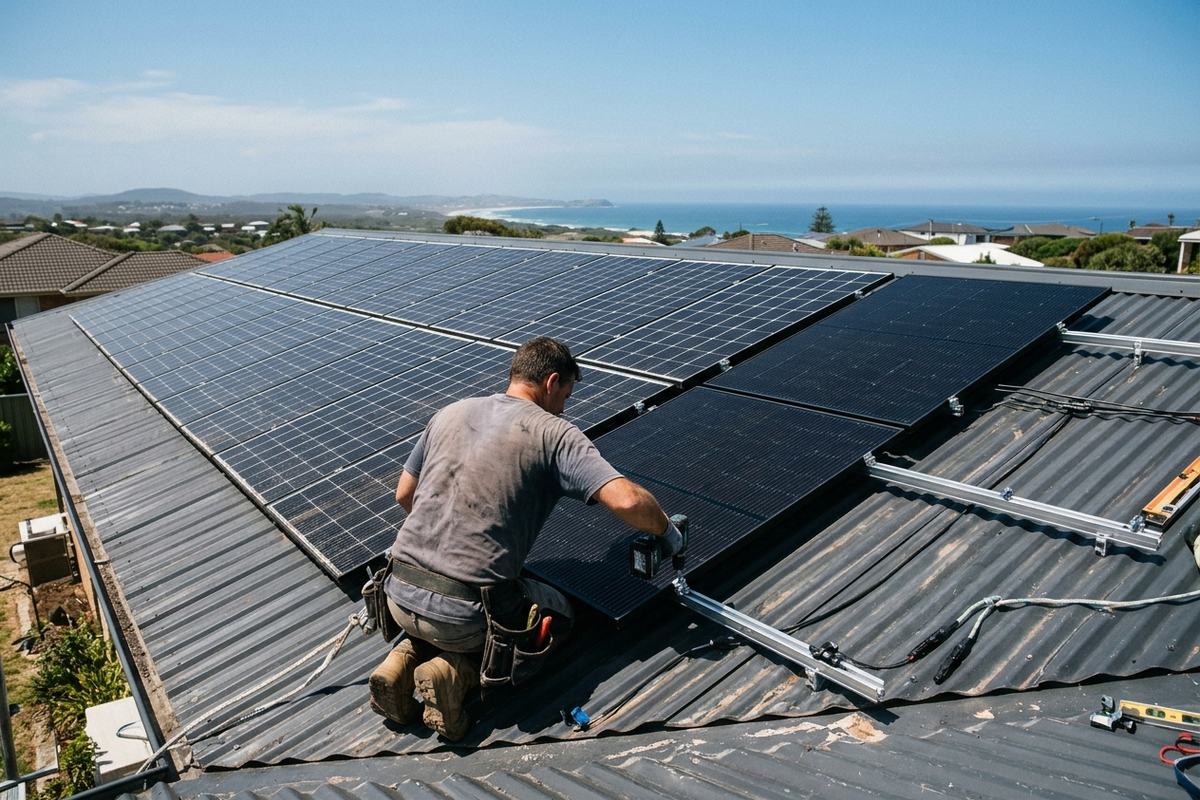
A household grows, an EV arrives, a pool goes in, and the solar system that comfortably covered the bills a few years ago no longer keeps up. Adding more panels seems like the obvious answer, and often it is, but it is rarely as simple as bolting a few more onto the roof. Whether it can be done, and how, comes down to the system already there.
Can Your Inverter Take More?
The first limit is the inverter. Every inverter has a capacity, and an array is sized to it. If the existing inverter is already running near its limit, simply adding panels means it cannot use the extra generation, you would be paying for panels whose output the inverter clips away. Some systems were installed with headroom that allows for expansion; many were sized tightly to the original array. Establishing what the inverter can actually accept is the first step, before any panels are ordered.
The Paths to a Bigger System
If the inverter has headroom, panels can sometimes be added to the existing strings or as a new string, within its capacity. If it does not, the options are replacing the inverter with a larger or hybrid unit to support the bigger array, or adding a second, separate system alongside the first with its own inverter. Each suits different situations and budgets, and the right one depends on the existing gear, the roof space, and where the household is heading. A straight assessment lays out which applies to you.
Matching Old and New Panels
Adding panels to an existing array brings a practical wrinkle: panel models change quickly, and the exact panels on your roof may no longer be made. New panels need to be electrically compatible with the existing ones if they are sharing a string, which is not always possible, and that often steers the design toward a separate string or a separate system. An electrician who works on solar knows how to handle this so the addition works with what is there rather than fighting it.
Network Approval and Compliance
Expanding a system usually means going back to the network provider, because the export capacity is changing. There may be limits on how large a system the local network will approve for export, particularly in some areas, and the expansion has to be lodged and approved like any change to the connection. The work also has to meet current standards, which can mean bringing parts of an older install up to date as part of the job. This is all routine for an electrician but easy for an owner to overlook.
Is It Worth It Versus Starting Fresh?
Sometimes expanding makes sense; sometimes a tired old system is better replaced outright, especially if the inverter is near the end of its life anyway. If the existing system is sound and has capacity, adding to it is the economical path. If it is ageing and limited, the honest answer may be that a new, larger system is better value than propping up the old one. You should expect that assessed straight, not steered toward whichever is dearer.
Frequently Asked Questions
Can I just add panels to my existing system?
Only if the inverter can take them. Many systems were sized tightly to the original array, so adding panels may mean upgrading the inverter or adding a separate system. The existing gear is checked first.
Will new panels match my old ones?
Not always. Panel models change quickly, so the exact ones may be unavailable, and new panels must be compatible to share a string. This often leads to a separate string or system rather than mixing old and new.
Do I need approval to expand my system?
Usually, yes. Expanding changes your export capacity, so it goes back to the network provider for approval, and the work must meet current standards. An electrician handles this as part of the job.
Is expanding better than a new system?
It depends on the condition of the existing system. A sound system with capacity is worth expanding; an ageing, limited one may be better replaced. A straight assessment tells you which suits your situation.
Outgrown the System You Have?
Adding panels is not always as simple as it sounds, the inverter has to take them. We check what your system can handle. Chat with our team across the Central Coast.