

Adding a Battery to an Existing Solar System on the Central Coast
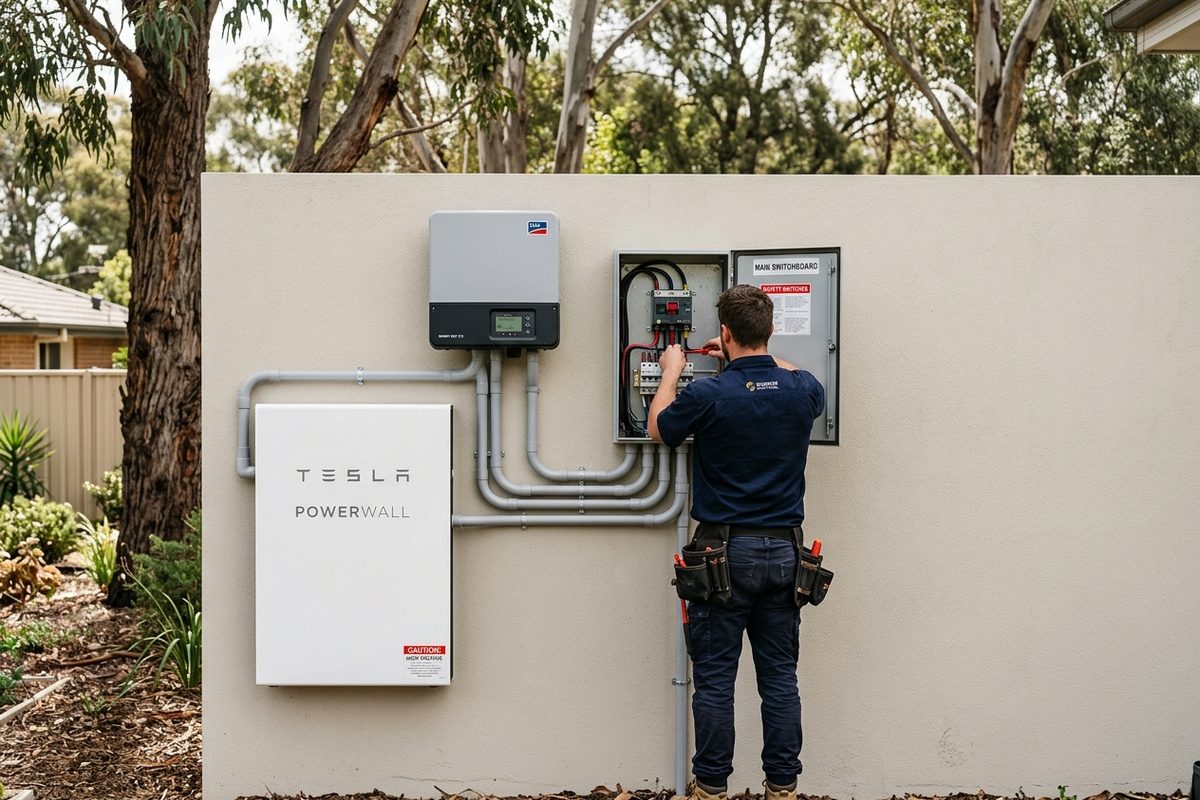
Plenty of Central Coast homes have had solar for years and are now thinking about storage, to use more of their own power in the evening, to ride out the odd blackout, or to stop exporting surplus for a low feed-in rate. The good news is that a battery can usually be added to an existing system. The detail that decides how simple it is comes down to the inverter already on the wall.
The First Question: Is Your Inverter Hybrid-Ready?
A hybrid inverter is built to manage a battery as well as solar. If your system was installed with one, adding storage is the clean path, the battery wires into hardware already designed for it. If your inverter is a standard string unit, which most older systems have, it cannot charge or discharge a battery on its own. That does not rule storage out; it just changes the approach. The first job of any battery retrofit is establishing which situation you are in.
The Two Retrofit Paths
If the existing inverter is not hybrid-capable, there are two honest options. The first is replacing it with a hybrid inverter, which suits a system whose inverter is ageing anyway, you get storage capability and a fresh inverter in one job. The second is an AC-coupled battery, which brings its own built-in inverter and sits alongside the existing solar inverter, leaving the original system untouched. AC-coupling is often the simpler retrofit on a system whose inverter still has good life left in it.
What the Electrical Work Involves
Either way, a battery retrofit is real electrical work. The battery needs a safe mounting location, usually an exterior wall away from direct heat, proper cabling back to the switchboard, the right protection and isolation, and configuration so the system knows how to use it. If backup during a blackout is wanted, that has to be specified and wired deliberately, not every battery setup provides it by default. This is licensed work that ties into your existing system, which is exactly the kind of job an electrician who services solar handles.
Sizing Storage to Your Usage
A battery is worth most when it is sized to how you actually use power. The aim is to store the surplus your panels make through the day and spend it in the evening at your own cost rather than buying it back from the grid at full retail. A battery much larger than your evening usage sits half-empty; one too small runs flat early. Matching the storage to your real evening load is what makes the numbers work, and it starts with understanding your usage rather than picking a headline capacity.
Checking the Existing System First
Before any battery goes on, the existing system gets a once-over. There is no sense bolting storage onto an array that is underperforming or carrying a fault, the battery would only store and discharge a reduced supply. A retrofit is the natural moment to confirm the solar side is healthy, the isolators and connectors are sound, and the switchboard can take the addition. Done in that order, the storage lands on a system that is actually ready for it.
Frequently Asked Questions
Can any solar system have a battery added?
Most can, but the path depends on the inverter. A hybrid inverter takes a battery directly; a standard inverter needs either replacing with a hybrid or pairing with an AC-coupled battery that brings its own inverter. An assessment confirms which suits your system.
Is it cheaper to add a battery now or replace the whole system?
For a healthy existing system, adding storage is almost always cheaper than starting over. An AC-coupled battery in particular leaves the working solar untouched. Replacement only makes sense if the existing system is at the end of its life anyway.
Will a battery keep my power on during a blackout?
Only if it is specified for backup and wired for it, not every battery provides backup by default. If riding out an outage matters to you, flag it early so the system is set up to do it.
Does adding a battery need an electrician?
Yes. It involves cabling to the switchboard, protection, isolation and configuration, licensed electrical work that ties into your existing system. It is not a plug-in appliance.
Want Storage on a System You Already Have?
We check whether your inverter is hybrid-ready or whether an AC-coupled battery is the smarter retrofit, then handle the electrical side properly. Chat with our team for a free assessment.