
Replacing an End-of-Life Solar Inverter on the Central Coast
Every solar system reaches a point where the inverter, not the panels, is the part holding it back. Inverters work hard, run hot, and are built on the expectation that they will be replaced somewhere in the life of a system that the panels will happily outlast. Recognising when yours has reached that point, and replacing it well, keeps the whole system earning rather than slowly fading.
The Signs an Inverter Is Finished
An inverter at the end of its life tends to announce it. Repeated fault codes, frequent dropouts, a steady fall in generation, unusual heat or noise, or simply being a unit the manufacturer no longer supports with parts or firmware are all signs. Where a fault would once have been repairable, an old unit out of warranty with no parts available reaches a point where chasing the repair costs more than it returns. That is the moment a replacement makes sense.
Why the Panels Usually Outlast It
Solar panels have no moving parts and degrade slowly, often working at slightly reduced output for twenty-five years or more. The inverter, by contrast, carries the active electrical load every daylight hour, converting power and managing heat constantly. That workload is why it ages first. Replacing the inverter on a system whose panels are still sound is normal and sensible, it is not a sign the system was a poor choice, just the natural rhythm of how these systems age.
Choosing the Replacement
A new inverter has to match the array already on the roof. It is sized to the panels so output is not clipped on bright days or wasted on capacity the array cannot feed. The replacement is also the moment to think ahead: if a battery or an EV is in your plans, a hybrid inverter now saves replacing the unit again later. If not, a quality string inverter suited to your roof does the job. The right choice depends on where the household is heading, not just where it is today.
What the Job Involves
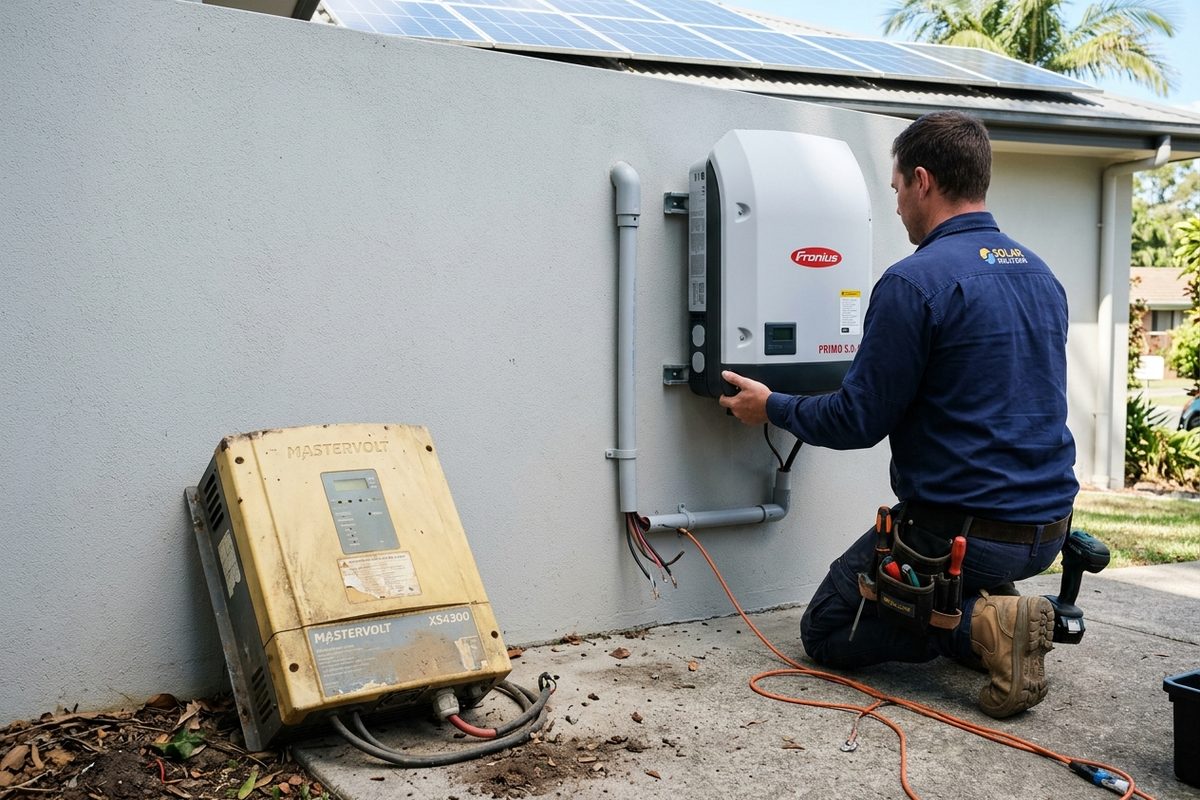
Replacing an inverter is a contained piece of work. The DC side is isolated safely, the old unit comes off the wall, the new inverter is mounted, wired and commissioned, and the system is tested and certified. Where the original went in years ago, the new install is brought up to current standards, which can mean minor additions to isolation or labelling. Siting is worth getting right at the same time, a ventilated spot out of the western afternoon sun adds years to the new unit's life.
Repair or Replace First
Before assuming a replacement, it is worth confirming the inverter really is the problem. Some faults are external, an isolator, a connection, a grid issue, and the inverter is fine once the real cause is fixed. A proper assessment establishes whether you are looking at a genuine end-of-life inverter or a repairable fault elsewhere, so you replace the unit because it needs replacing, not on a guess.
Frequently Asked Questions
How long should an inverter last before replacement?
Generally well short of the panels, because it carries the active load every day. Replacement partway through a system's life is normal rather than a fault, though good siting and quality gear extend it.
Can I switch to a hybrid inverter when I replace it?
Often yes, and it is worth considering if a battery is in your future. Compatibility with your panels and switchboard is checked first, and you are advised whether it is worth it for your system.
Will a new inverter restore my old output?
If the inverter was the limiting factor, a matched replacement brings the system back to performing as it should. If panels or other parts are also tired, those are assessed too so the whole system is sound.
Is replacing the inverter cheaper than a new system?
Almost always, where the panels are still sound. Reusing a good array and replacing just the inverter is a fraction of the cost of starting over.
Inverter on Its Last Legs?
If your inverter is ageing out, a replacement matched to your panels gets the system performing again. Chat with our team for a free assessment across the Central Coast.