

What to Do When Your Solar Stops Exporting to the Grid
You notice it on the bill: the feed-in credits that used to take the edge off have shrunk or vanished. Your solar has stopped exporting, or stopped getting paid for it, and the cause could sit anywhere from the roof to the retailer. Because several very different problems produce the same symptom, the first job is working out which one you have.
Start With Whether the System Is Generating
Exporting and generating are not the same thing. A system can be generating fine but consuming everything it makes, leaving nothing to export, which is normal if your daytime usage has grown. Or it can have stopped generating altogether, in which case there is nothing to export because nothing is being made. The monitoring, or a look at the inverter, tells you which. No generation points at a system fault; good generation with no export points elsewhere.
Inverter and System Faults
If the system is not generating, the usual suspects are an inverter that has tripped or failed, a dead string, or a DC-side fault. The inverter may be showing a code, sitting dark, or cycling on and off. These are the faults covered by ordinary solar repair: the system is diagnosed, the cause is found, and it is brought back online. Once it is generating again, the export usually follows, assuming the metering side is in order.
Metering and Configuration Issues
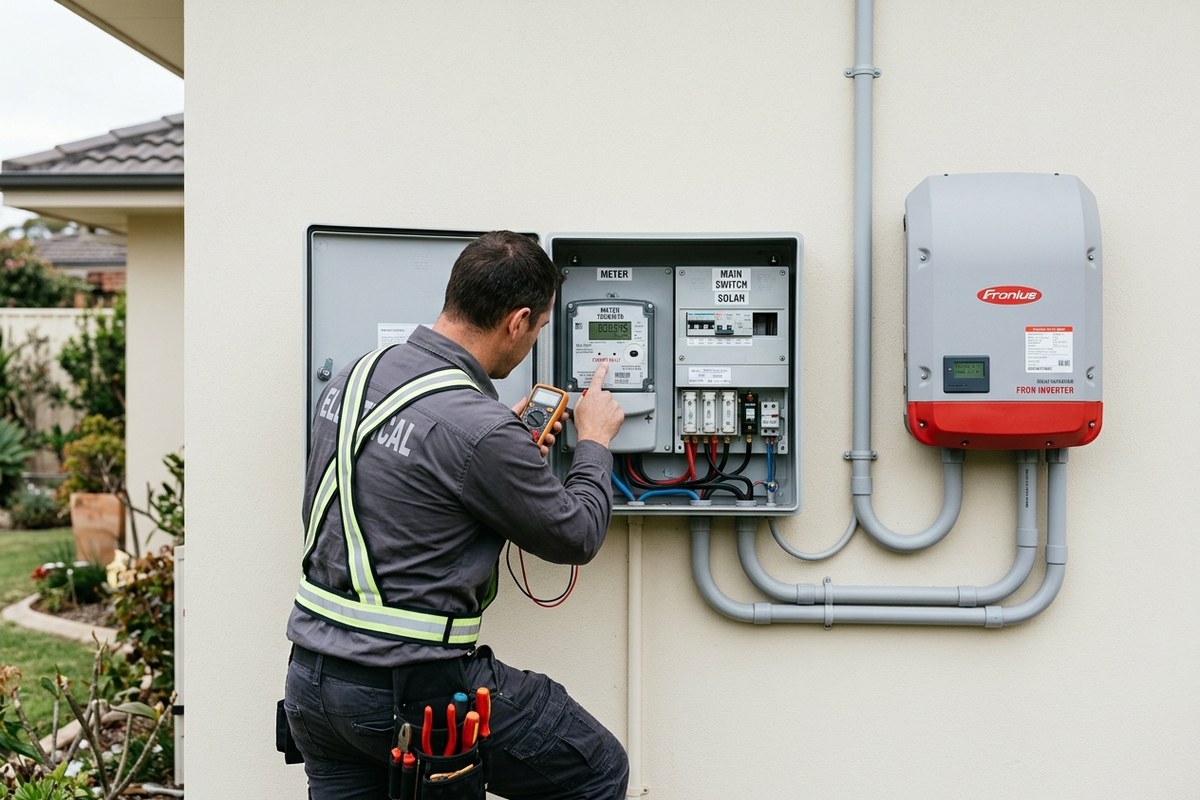
Sometimes the system generates and self-consumes correctly but the export is not being recorded or credited. This can be a meter that was not set up to measure export properly, a meter fault, or a configuration issue after a meter or retailer change. A house that switched plans, changed retailers, or had a new meter installed can end up with export that the billing simply is not capturing. This is where the fault sits with the metering or the retailer rather than the solar itself.
Tariff and Retailer Changes
Then there is the case where nothing is broken at all. Feed-in tariffs change, and a plan that once paid a healthy rate may now pay very little, so the credits shrink without any fault anywhere. A retailer may have changed your plan, or a promotional rate may have ended. This is not a repair job, it is a billing matter, but it is worth ruling in or out before assuming the system has failed, because the fix is a phone call, not an electrician.
Telling Them Apart
The sensible order is: confirm whether the system is generating, then whether it is exporting, then whether that export is being credited. Generation is checked at the inverter and monitoring; export and crediting are checked against the meter and the bill. An electrician can establish the first two quickly and tell you whether the problem is a genuine system fault to repair or a metering or tariff matter to take up with your retailer.
Frequently Asked Questions
My system generates but the bill shows no feed-in, why?
The system may be self-consuming everything it makes, the meter may not be recording export correctly, or your tariff may have changed. The fix depends which, a check separates a system issue from a metering or billing one.
Could my feed-in just have dropped in value?
Yes. Feed-in rates change and plans get switched, so smaller credits can reflect a lower tariff rather than any fault. It is worth checking your plan before assuming the system has failed.
How do I know if it is the inverter or the meter?
If the system is not generating, it points at the inverter or DC side; if it is generating but not exporting or being credited, it points at the meter or retailer. An electrician confirms which quickly.
Is no export always a fault?
No. Sometimes the system is working perfectly and simply using all it makes, or the tariff has changed. Only some causes are repairs; others are billing matters for your retailer.
Feed-In Credits Disappeared?
If your solar has stopped exporting, the cause could be the inverter, the meter or the tariff. We can find out which. Chat with our team for a check across the Central Coast.